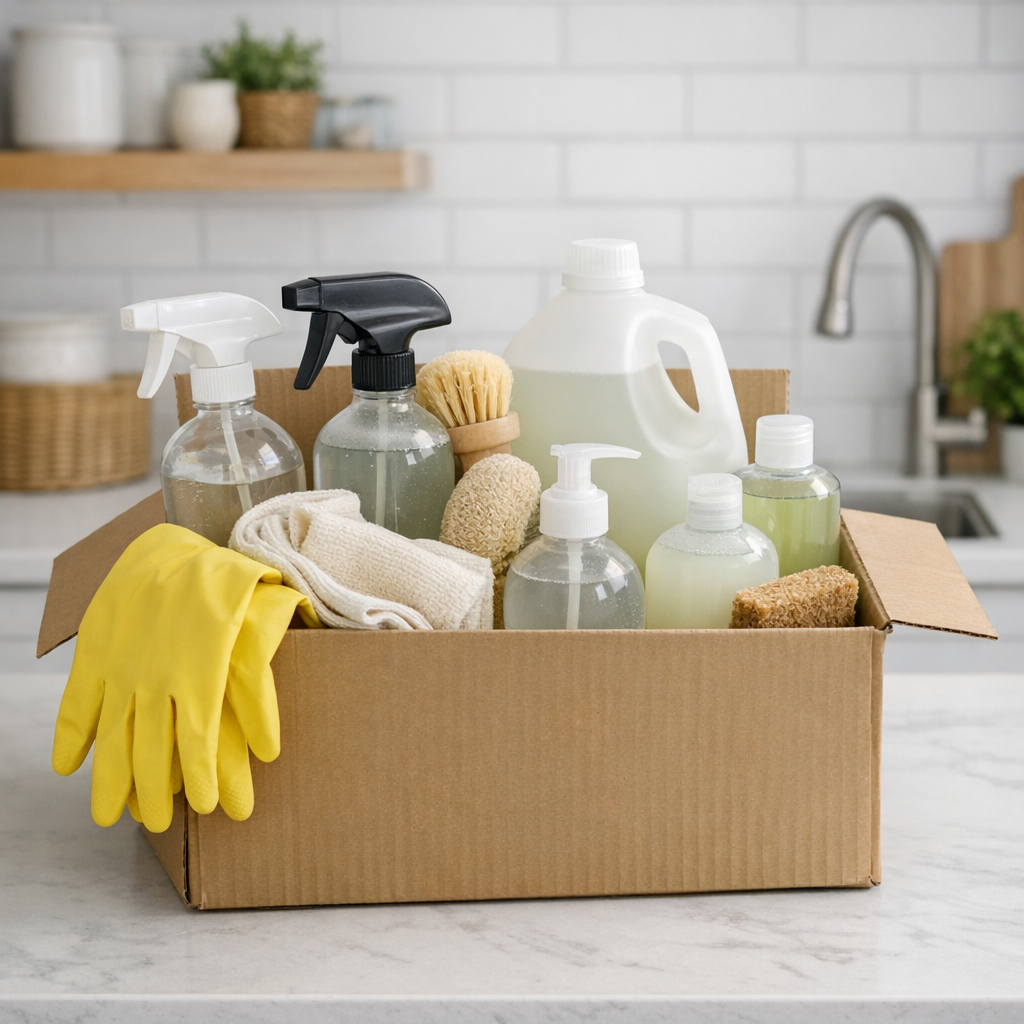
If you’ve been searching for the best non toxic cleaning supplies, you’ve come to the right place!
Cleaning isn’t just about what’s on your counters—it’s also about what’s in your air and what ends up on surfaces your family touches every day. And according to the American Lung Association, household and cleaning products can include chemicals that irritate the eyes or throat or cause headaches, and some release volatile organic compounds (VOCs) that contribute to indoor air pollution. [lung.org]
So today, I’m going to make this simple:
- What “non-toxic” actually means in real life
- Why EWG Verified® helps you shop smarter
- How common cleaners can add to endocrine stress and fertility concerns
- What I mean by toxic home syndrome + the rain barrel “load” concept
- Why an air purifier matters
- And finally: the products I trust to use around my family
What “EWG Verified®” Means (and why it’s a shortcut you can trust)
The biggest challenge with “clean” products is that marketing language isn’t regulated the way people assume. That’s why third‑party standards matter.
EWG Verified® is a mark that indicates a product meets their strictest criteria for transparency and health, including avoiding EWG’s ingredients of concern and providing full transparency, including fragrance ingredients.
In plain language: it helps you make informed choices without needing a chemistry degree.
If you want to read the standard directly, here’s the official explanation from EWG:
About the EWG Verified® mark [ewg.org]
The health conversation: endocrine load, fertility concerns, and real-life symptoms
The endocrine system is how your body communicates through hormones, and NIEHS notes that endocrine disruptors are chemicals that may mimic or interfere with the body’s hormones—and that contact can occur through air, diet, skin, and water. [niehs.nih.gov]
NIEHS also lists phthalates among common endocrine disruptors and notes they’re found in hundreds of products, including fragrances.
Does that mean every cleaner causes fertility problems? No. But it does mean it’s reasonable—especially if someone is already dealing with hormone or fertility challenges—to reduce avoidable exposure where you can.
And the American Lung Association adds another important angle: cleaning products can release VOCs, and fragrances (even natural ones) can contribute to indoor pollutants. [lung.org]
Toxic Home Syndrome + the Rain Barrel Effect (a helpful metaphor)
When I say toxic home syndrome, I’m describing something many people feel but can’t name:
You clean your house… and yet you feel worse afterward.
Stuffy, foggy, irritated, headachy, itchy, or just “off.”
One useful way to explain why is the rain barrel effect (a metaphor for total body burden):
- Your body has natural detoxification and elimination pathways.
- But when the “inputs” (chemicals, allergens, mold, stress, poor sleep, fragrances, VOCs) exceed what your body can clear, the barrel overflows.
- Overflow can look like symptoms such as fatigue, brain fog, headaches, allergies, skin irritation, and more. (Symptoms are non-specific—this is about load, not diagnosis.) [lung.org], [epa.gov]
This is why I’m such a fan of focusing on low-effort, high-impact swaps—like switching your daily cleaners and improving indoor air.
Why indoor air matters (and why cleaning products are part of the story)
VOCs are emitted as gases from many household products, and the EPA notes VOC concentrations can be higher indoors than outdoors, with potential short‑ and long‑term health effects depending on exposure. [epa.gov]
The American Lung Association specifically calls out that cleaning supplies can release VOCs and recommends choosing products with reduced VOCs/fragrances and using good ventilation. [lung.org]
So yes—cleaning product choice matters. But also: air purification matters.
My Air Purifier Recommendation: AirDoctor (and why I like it)
I recommend AirDoctor because it’s designed to address both:
- particles (dust, pollen, pet dander, smoke) and
- gases/VOCs (the “invisible” indoor air stressors)
According to AirDoctor’s own FAQ, their systems use an UltraHEPA filter and a Carbon/Gas Trap/VOC filter designed to remove gases, odors, and VOCs (including formaldehyde).
Retail documentation for AirDoctor models also highlights VOC removal and the combination of UltraHEPA + carbon/VOC filtration.
Practical benefits (why this matters in real homes)
- Helps reduce airborne particles that can contribute to irritation (especially during cleaning)
- Targets VOCs and odors as part of filtration strategy
- Supports the “rain barrel” approach by reducing one major category of daily input (indoor air pollutants)
The Best Non Toxic Cleaning Supplies I Recommend
I’m keeping this easy: one brand, full routine.
ATTITUDE has many products listed as VERIFIED in EWG’s Guide to Healthy Cleaning, including all‑purpose, kitchen, bathroom, and glass cleaners. [ewg.org]
1) All‑Purpose Cleaner (the everyday workhorse)
This is your countertop, highchair, doorknob, sink, and quick-clean hero.
ATTITUDE’s all‑purpose cleaner is EWG VERIFIED™, comes in citrus zest, grapefruit, lavender or unscented. And you can purchase
2) Kitchen Cleaner / Degreaser (where residue matters)
Kitchen is high-contact: food surfaces, hands, kids, pets. This is where the EWG certified kitchen spray comes in handy. And if you can’t live without your scents, fear not as this one comes in a yummy citrus zest.
3) Bathroom Cleaner (soap scum + frequent inhalation zone)
Bathrooms are small spaces—meaning whatever you spray becomes something you’re breathing. It’s important that you’re not spraying anything that can have harmful effects on your body over time. Attitude’s Bathroom Cleaner comes in citrus zest, lemon & rosewood or unscented.
4) Window + Mirror Cleaner (because “clean air” includes what you spray)
Glass cleaner is often used right at face level—which makes ingredient transparency matter.
5) Floor Cleaner (for crawling babies + pets + bare feet)
Floors are the ultimate exposure surface—hands, toys, and skin contact. I started using this brand when my daughter started crawling and I feel good knowing she wasn’t ingesting harmful ingredients. I also love that this floor cleaner can be used on wood floors and that it doesn’t leave streaks!
6) Dish Soap + Dishwasher Pods (bonus: high-frequency “micro exposure” category)
If you’re minimizing contribution to your “rain barrel,” dish products matter because they’re used daily.
This was the dish soap I used when my daughter was drinking from bottles. Now we use this one which comes in citrus zest, coriander & olive, grapefruit, green apple & basil, Italian lemon, wildflowers and unscented.
How to make these swaps actually stick (simple plan)
If you’re trying to reduce “toxic home syndrome” and lower your rain‑barrel load, don’t overhaul everything at once.
Start here:
- Swap all‑purpose + bathroom first (most frequent use).
- Add AirDoctor in the room you spend the most time in (bedroom or living room)
- Next: kitchen + floors
- Finally: dish products
This is how you create change you’ll maintain.
FAQ (great for Yoast + Featured Snippets)
What are the best non toxic cleaning supplies?
For most families, the best non toxic cleaning supplies are the ones that are transparent, third‑party verified, and practical enough to use consistently. EWG Verified® is one helpful shortcut for finding products that meet strict transparency and health criteria. [ewg.org], [ewg.org]
Why does EWG Verified matter?
EWG explains that the mark indicates products meet their strictest standards, including avoiding chemicals of concern and providing full ingredient transparency (including fragrance components). [ewg.org]
Can cleaning products affect hormones?
NIEHS explains endocrine disruptors can interfere with hormones and that exposures can happen through air, skin, diet, and water. They also list phthalates (found in products including fragrances) among common endocrine disruptors. [niehs.nih.gov]
Do air purifiers help with VOCs from cleaning?
VOCs are a recognized indoor air pollutant category, and AirDoctor describes using a carbon/VOC filter designed to remove VOCs (including formaldehyde) as part of its filtration system.
Final Thoughts: A cleaner home should support your health—not compete with it
If you’ve been looking for the best non toxic cleaning supplies, the goal isn’t perfection. It’s lowering the daily inputs that quietly overfill your rain barrel.
A high‑trust cleaning routine (like ATTITUDE + EWG standards) plus an air purifier that targets particles and VOCs (like AirDoctor) is a powerful, realistic place to start.
For more of my must have non-toxic swaps, check out my Non-Tox Shop.
