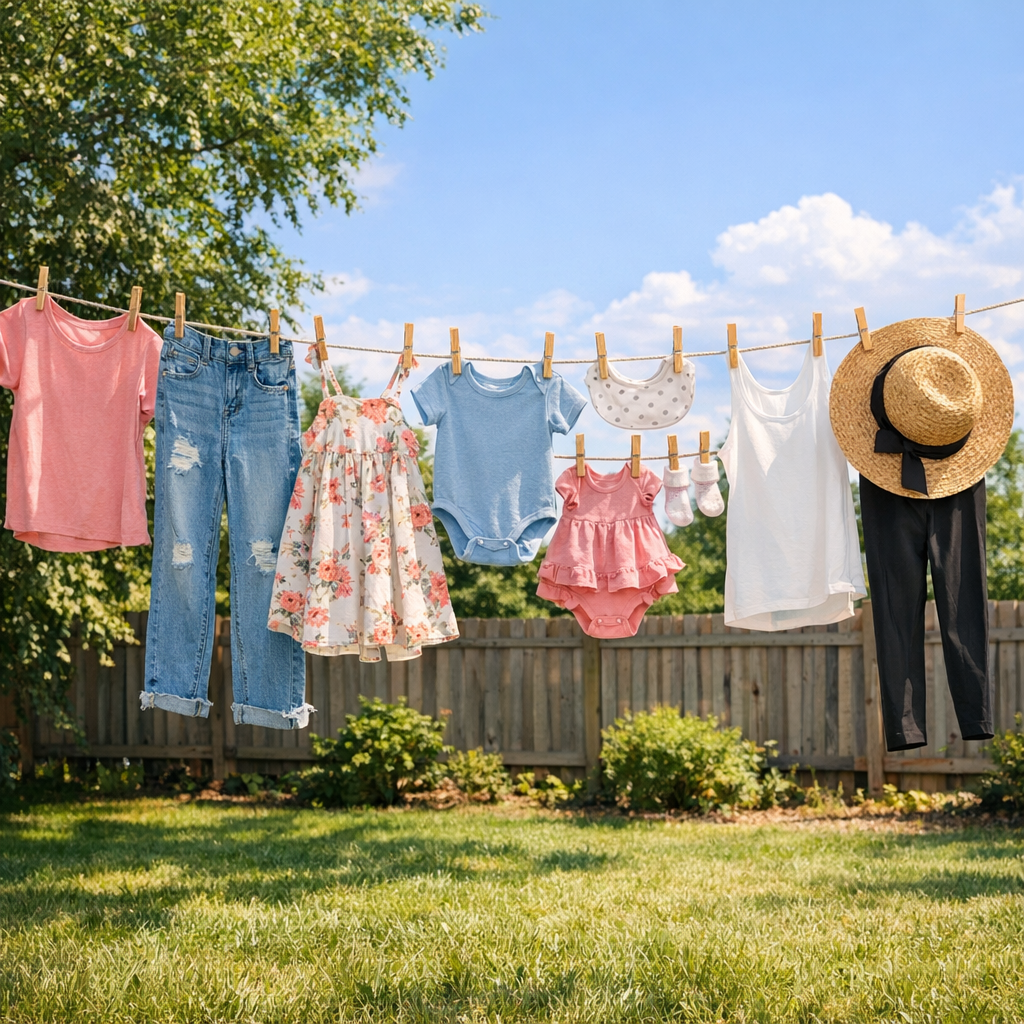
If you’re searching for the best non toxic laundry detergent, you’re probably not just trying to get stains out—you’re trying to reduce what your family is exposed to every single day. And you’re not overthinking it.
Laundry products don’t just “stay in the laundry room.” They can affect the air you breathe and the fabric that sits on your skin for hours—especially pajamas, underwear, workout clothes, towels, and sheets. [lung.org], [niehs.nih.gov]
I’m going to keep this simple and practical: what to look for, what to avoid, the little-known fragrance issue, and the laundry brand I trust most.
Why “Non-Toxic” Laundry Soap Matters More Than People Realize
1) “Fragrance” can be a black box
Here’s a little-known fact: in the U.S., companies don’t have to list every ingredient in many household products, and fragrance blends can be treated as trade secrets. [fda.gov]
That matters because “fragrance” can be made from many different chemicals, and some fragrance-related chemicals (like certain phthalates) are discussed as endocrine disruptors in scientific and public health contexts.
2) Scented products can affect indoor air
Household and cleaning products can release volatile organic compounds (VOCs) that may irritate the eyes/throat or contribute to headaches and other issues—especially in sensitive individuals. [pmc.ncbi.nlm.nih.gov]
Research also documents that fragranced consumer products are a meaningful source of exposure for a portion of the population.
3) Your skin is an exposure pathway (especially with fabric contact)
The skin can absorb chemicals—permeability varies by chemical and situation.
And here’s the practical part that’s easy to miss: clothing creates long contact time. If detergent residue or fragrance compounds remain on fabric, that’s repeated exposure through skin contact.
What to Look For in the Best Non toxic laundry detergent
When someone asks me what makes the best non toxic laundry detergent, I look for five things:
✅ 1) Fragrance-free or truly transparent scenting
If you’re sensitive (or you’re washing for kids), unscented is often the easiest win. Fragrance is a common source of VOCs and can be hard to evaluate if ingredients aren’t fully transparent.
✅ 2) Third-party standards that actually mean something
Marketing terms like “green” and “natural” don’t always equal safer.
Look for stronger indicators like EWG Verified® (more on that below).
✅ 3) “Free-from” lists that target common concerns
Not every family needs the same “free from” list—but many people prioritize avoiding ingredients/classes that are commonly flagged for irritation or environmental concerns (like certain preservatives, dyes, optical brighteners, etc.).
✅ 4) Concentrated formulas (less product, less packaging)
Concentrates help reduce how much you store and use over time.
✅ 5) The best non toxic laundry detergent works in cold water + HE machines
Cold-water washing can reduce energy use; HE compatibility keeps it practical.
What is EWG Verified® (and why it’s worth caring about)?
The EWG Verified® mark is designed to help shoppers identify products that meet stricter standards and are free from EWG’s chemicals of concern, according to the program description.
If you’ve ever stared at a label and thought, “I still don’t know if this is actually better,” this is one of the clearest shortcuts available.
Learn more here: EWG Verified®
THE Best Non toxic laundry detergent
If you want the most straightforward “meets a high bar” option, ATTITUDE is the best option because their laundry detergent is explicitly marketed as EWG VERIFIED™, and they describe their formula as vegan and made with 98% naturally derived ingredients.
Why I like it (especially for families)
- EWG VERIFIED™ (stronger trust signal for many shoppers)
- Vegan formula (as stated by the brand)
- Concentrated detergent (more loads, same amount)
- Cold-water effective
What it’s free of (as stated in available product listings)
The ATTITUDE product listing information commonly highlights “free-from” features (for example: dye-free, enzyme-free, formaldehyde-free, phosphate-free, and sodium lauryl sulfate free).
(Always confirm on the specific bottle/variant you buy, as formulas can vary by scent/line.)
The “Little Known” Laundry Truth: Your Clothes Are a Long-Exposure Scenario
A lot of people think exposure is only about what you inhale while pouring detergent.
But the bigger deal for many families is contact time:
- clothing against skin for 8–12+ hours
- towels against damp skin
- sheets against warm skin all night
Public health resources acknowledge that exposure to endocrine disruptors can occur through air, diet, skin, and water, and the skin is a real pathway for chemical contact. [niehs.nih.gov], [niehs.nih.gov]
If your goal is the best non toxic laundry detergent, choosing a formula that minimizes fragrance and questionable additives can be a meaningful, low-effort way to reduce day-to-day exposure. [lung.org], [ewg.org]
Simple “Non-Toxic Laundry” Upgrade Checklist
If you want results without making your life harder, do this:
- Choose detergents from the Attitude brand
- If you’re sensitive or working on hormone support, try the fragrance-free options first
- Wash sheets + towels with your new detergent before judging results (they hold residue)
- Ventilate your laundry area if you use any scented products in the home (VOCs accumulate indoors) [lung.org], [pmc.ncbi.nlm.nih.gov]
FAQ: Best Non toxic laundry detergent
What is the best non toxic laundry detergent for sensitive skin?
Many sensitive households start with unscented options and look for reputable third-party standards.
ATTITUDE offers EWG VERIFIED™ laundry detergents, including unscented variants. [lung.org], [ewg.org] [ewg.org], [amazon.com]
Is fragrance really that big of a deal?
For many people, yes—because fragrance formulas may include undisclosed components, and fragranced products are documented sources of indoor exposure and reported sensitivities in the population.
Can laundry chemicals affect women’s hormones?
Endocrine-disrupting chemicals (EDCs) are described by NIEHS as chemicals that can interfere with hormones, and phthalates are listed among common, well-studied EDCs found in hundreds of products including fragrances.
(This is about potential exposure and risk context—not a diagnosis.) [niehs.nih.gov], [niehs.nih.gov] [niehs.nih.gov]
Explore More Non Toxic Favs
Changing your laundry soap will be a meaningful upgrade—especially for women’s hormone support goals, sensitive skin households, and anyone who wants to reduce the daily load of avoidable exposure. If you want to know what other products I can’t live without when it comes to keeping my family safe, check out my Clean Shop.
